Success isn't claimed. It's measured.
These brands didn’t wait for regulations to force their hand. They chose to know first, act early, and prove it, turning data into verified claims, supply chain clarity, and a transparency standard their competitors are still catching up to.


Challenge
Ecoalf, a pioneer in sustainable fashion since 2009, faced the challenge of scaling global growth without compromising its core mission: minimizing the use of natural resources. The brand needed to transform its decision-making process so that every department considered ESG impacts, implementing a “dual accounting” system that integrated sustainability metrics into design.
Solution
- Life Cycle Assessment (LCA) — Meticulous data capture at every stage of the product life cycle to guide ecodesign of future collections.
- End-to-End Traceability — Full supply chain visibility, enabling selection and validation of suppliers aligned with high social and environmental standards.
- Direct-to-Consumer Transparency — Data sharing on every product sheet, connecting customers with real environmental savings data from their purchase.
100%
Data sharing
All garments with data access via product description.
Full LCA
Product coverage
Performed for every product in the collection.
Total Visibility
Supply chain
Detailed mapping of all processes and locations.
Active Ecodesign
Integration
Impact data embedded into the design phase.
We have found in BCome the perfect partner to help us grow knowing our impacts. BCome results help us in making decisions when designing our products and in communicating our achievements.

Challenge
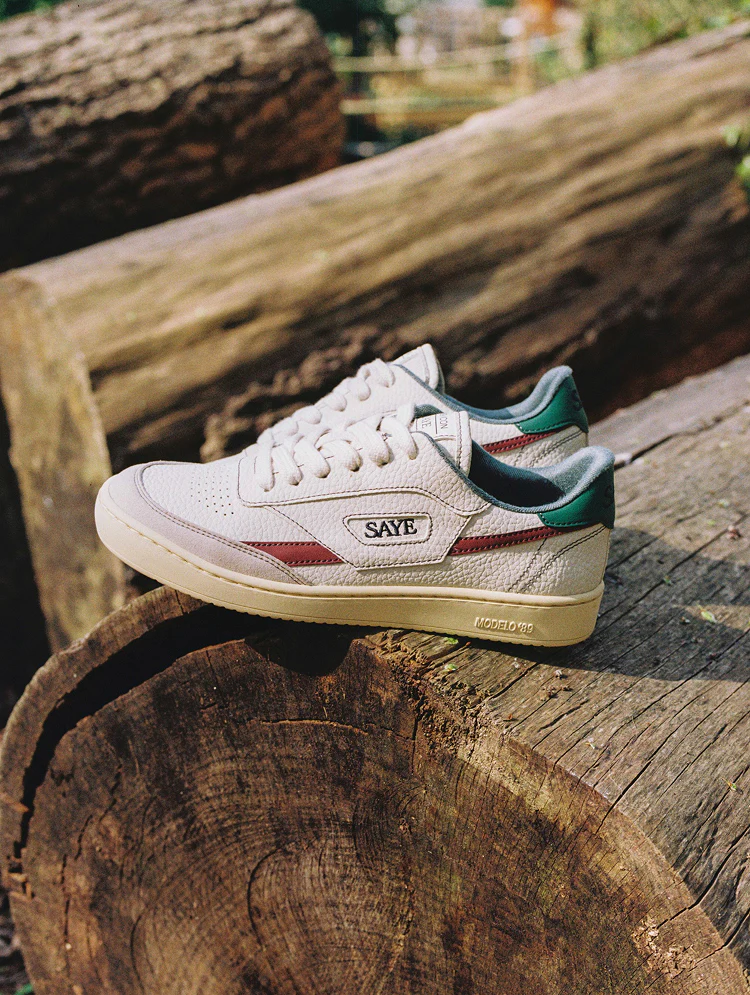
SAYE manages a complex supply chain spanning from Taiwan to Portugal. Despite maintaining close relationships with their partners, they faced significant challenges accurately mapping suppliers and obtaining verifiable data, making it difficult to identify risks across the deeper tiers of their value chain (Tiers 2 to 4).
Solution
- Comprehensive Supplier Mapping — Categorization based on life cycle stage: raw materials, materials, and articles.
- Custom Datasets — Specific data tracking for innovative materials, including Mango Vegan Napa, recycled mangoes, and nopal cactus.
- Performance Analytics — Tools to measure each component’s impact, revealing that 52% of materials were sourced from Asia, triggering a strategic relocation plan.
99%
Raw materials origin
Known and traceable from source.
Tier 4
Traceability depth
Traceability level reached in the value chain.
1,000+
Insights collected
Sustainability data points gathered.
5
Custom datasets developed
Designed to accurately showcase their innovative materials.
Having the visibility of our supply chain has allowed us to see that all the extra effort that is made to look for a better material, a better supplier, a better quality and to be up to date with any innovation, is worth it.


Challenge
Thinking Mu, a pioneer in sustainable fashion since 2010, faced the growing challenge of standing out in an industry saturated with greenwashing. As a brand built on radical honesty, they needed a data-driven tool to validate their environmental efforts, differentiate authentic messages from competitors, and ensure compliance with emerging European Green Claims regulations.
Solution
- Automated Data Sharing — Seamless integration of sustainability insights into e-commerce and physical product labeling.
- Impact Equivalencies — Translation of complex environmental metrics into tangible indicators for the end consumer.
- Third-Party Verification — BCome’s independent methodology guaranteeing accuracy and transparency across all annual sustainability reports.
30+
Insights per product
Sustainability data points surfaced per SKU.
0%
Misleading claims
Through solid data verified by BCome.
100%
QR coverage
All garments with data access via QR code.
High Trust
Consumer loyalty
Verified increase in brand reputation.
The data provided by BCome help us to give visibility to our impact in a simple, professional and understandable way. This is essential and is directly linked to being able to inform of all the effort behind each garment.

Challenge
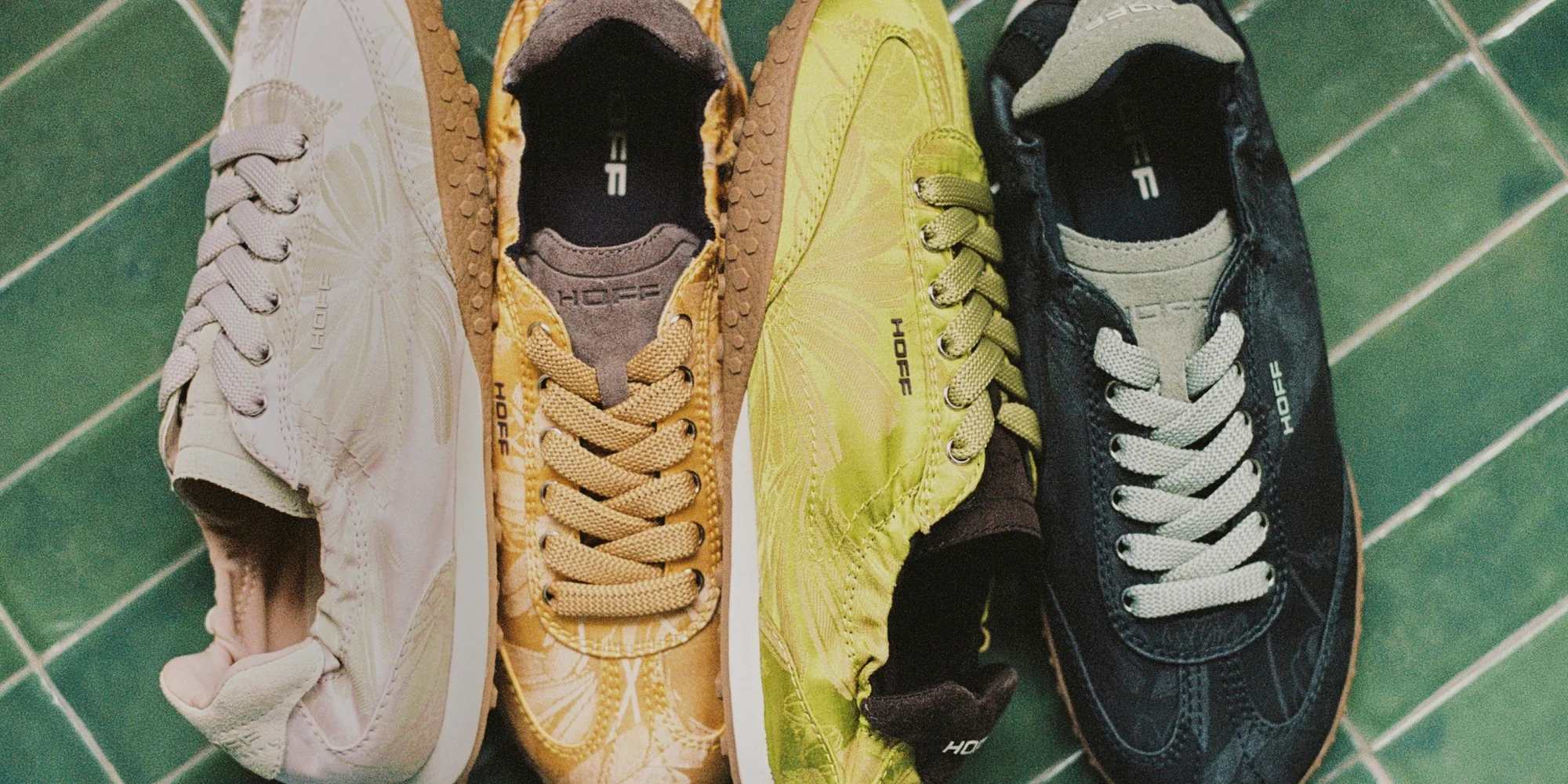
HOFF faced the urgent need to align its internal operations with evolving environmental regulations and standards. To successfully elevate its market position and transition into a higher-end segment, the brand required a robust, data-driven framework. They needed to deeply understand their direct environmental footprint, improve supply chain traceability, and build stronger internal systems to back up their commitment to continuous improvement and responsibility.
Solution
- Comprehensive Environmental Assessment — Collaboration with BCome to perform a “cradle-to-gate” Life Cycle Assessment (LCA) encompassing the full collection.
- Supply Chain Mapping — Utilized BCome’s traceability methodology to track and monitor a complex global supplier network, achieving high transparency across manufacturing and processing stages.
- Regulatory Readiness — Built a structured roadmap to anticipate and comply with upcoming EU legislative developments, including data collection for the Digital Product Passport (DPP).
80%
Supplier Traceability Rate
Successfully mapped and monitored their complex global network.
-30%
Water Scarcity Impact
Compared to conventional industry benchmarks.
-26%
Global Warming Emissions
Throughout the supply chain compared to market standards.
20%
Sustainable Materials
Successfully incorporated bio-based and recycled raw materials.
The main benefit of calculating the environmental impact of our products throughout their life cycle is to improve materials and products with the worst impact.


Challenge
Bobo Choses faced the challenge of aligning its collection with the new Ecobalyse framework. Calculating this specific environmental score requires a complex blend of traditional Life Cycle Assessment (LCA) data alongside country-specific bonuses. To maintain its strong presence in the French market without overwhelming its internal operations, the brand needed an automated solution to seamlessly transform its supply chain data into verified Ecobalyse scores.
Solution
- Automated Impact Assessment — To calculate and analyze the cradle-to-gate environmental footprint of each garment, turning complex supply chain data into actionable insights.
- Ecobalyse Integration — Automatically adapts and maps existing product data to the official French Ecobalyse methodology, calculating the precise environmental cost score for each garment.
- Digital Transparency — Public display of verified Ecobalyse points, allowing Bobo Choses to seamlessly meet legal e-commerce communication requirements for the French market.
470+
References assessed
Using the official Ecobalyse methodology through BCome.
100%
Regulatory Alignment
Calculated and verified the official Ecobalyse score across their target catalog.
Zero
Manual Audit Hours
Automated the complex regulatory scoring process.
100%
Compliant Consumer Transparency
Deployed verified environmental labels directly to product pages.
Designing more sustainable scenarios can be subtle, involving seemingly minor changes. What’s important is that they are honest and accompanied by a vision that drives the transformation of methodologies.


Challenge
MUNICH wanted to pioneer authentic circularity by launching its “Second Life” repair program to extend product lifespans. The brand required precise data to measure the actual environmental value of extending a product’s life over replacing it, ensuring seamless preparation for strict upcoming EU regulations like the Right to Repair and the Digital Product Passport.
Solution
- Automated Life Cycle Assessment (LCA) — Integrated scientific environmental data into product sheets, allowing the brand to analyze and display the precise cradle-to-gate impact of its footwear lines.
- Repair Impact Savings — Quantified the exact net environmental savings of individual repair interventions.
- Regulatory & DPP Compliance — Provided the required technical traceability to position MUNICH ahead of European legislative compliance, ensuring the brand is fully data-ready for the Digital Product Passport.
46%
Emissions Reduction
Repairing vs. manufacturing a brand-new pair.
-1.44 kg CO₂ eq
Net Impact
Due to the displacement rate of new production.
0.64 kg CO₂ eq
Environmental return on investment
CO₂ eq avoided for every single € invested in repair management.
100%
Technical Recovery Rate
Avoiding wasted transport costs.
Starting with repairs allows us to build the operational infrastructure we’ll need in the future to manage our own second-hand marketplace and manufacture products using recovered materials.


Challenge
Weturn transforms unsold products and fabric scraps into high-quality new yarns. Despite their innovative model, they faced the challenge of quantifying and proving the environmental benefits of their closed-loop process. To build trust with major fashion groups such as LVMH, they needed a standardized method to measure circular performance and demonstrate how their materials outperform virgin alternatives.
Solution
- Circularity Measurement (CEI) — BCome’s methodology based on the Ellen MacArthur Foundation’s MCI framework, quantifying the shift from linear to circular flows.
- Product Longevity Assessment — Evaluation of use intensity and duration vs. industry standards.
- Impact Validation — Data-verified benefits of recycled cotton fibers, enabling corrective actions to further preserve biodiversity and resources.
63%
More circular
Than market alternatives, verified by CEI.
44%
Lower linear flow
Versus industry average production model.
4
Product categories
Full R&D product lines analyzed end-to-end.
100%
Recycled & traceable
European materials, verified durability testing.
Thanks to BCome’s analysis, we can implement corrective actions to further reduce our impact or those of our customers and act in the best way to preserve biodiversity and resources.